Where did the
time go?
You cannot add more time to your life.
But you may be able to add more life to your time.
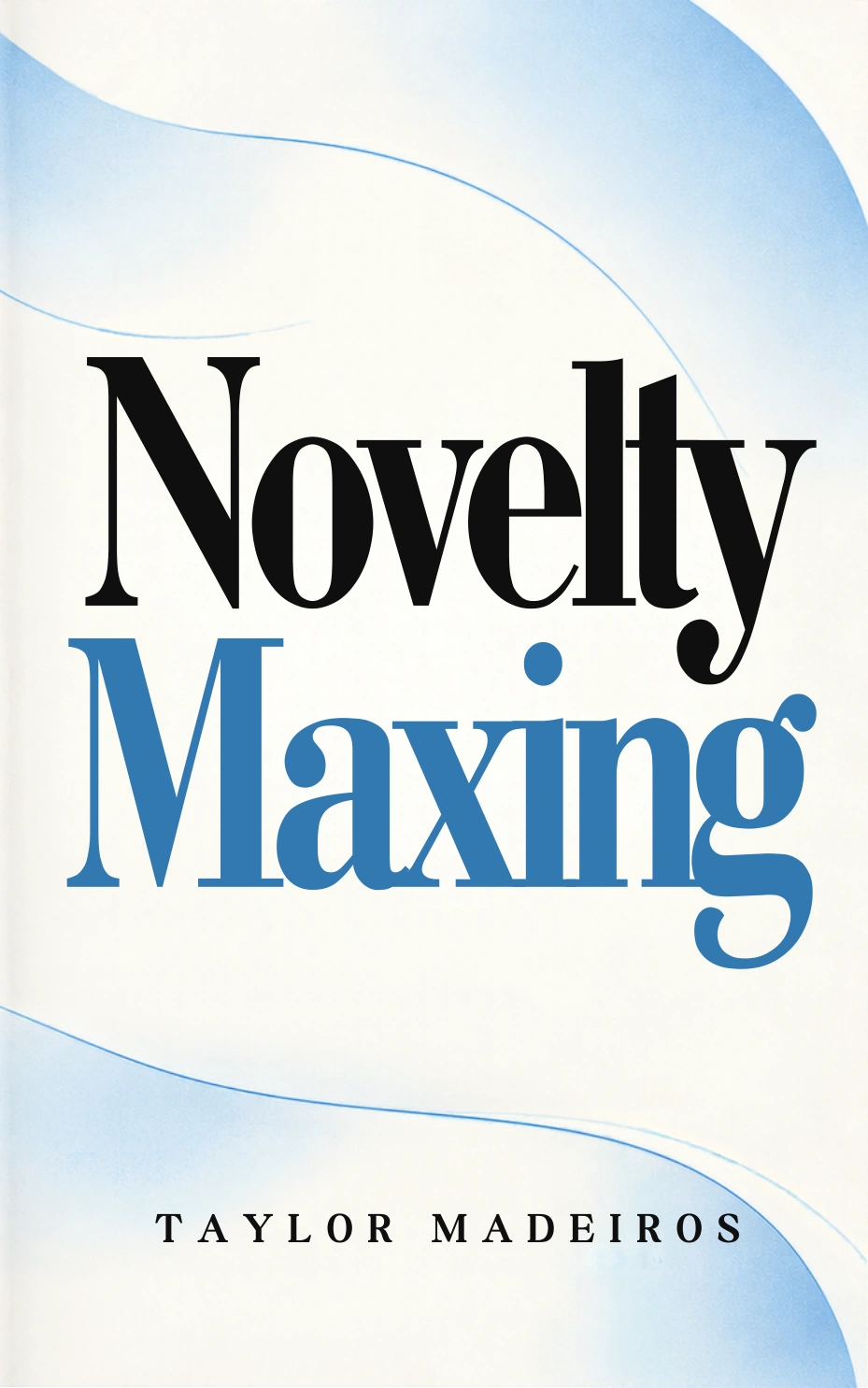
Novelty Maxing explores how new experiences can change our perception of time, and how small, deliberate departures from the familiar may make life feel longer from the inside.
Saving time and
feeling you’ve lived it
are different projects.
A month can be full of work, dinners, errands, and ordinary pleasures, yet feel surprisingly small when you look back. The hours were there. What’s harder to find is the shape of the month itself.
Novelty Maxing begins with that familiar feeling and a possibility: the amount of experienced life inside a fixed stretch of clock time may be more flexible than we assume.
The problem isn’t routine itself. A weekly dinner can sustain a friendship; a familiar workout can build strength. The question is which repetitions have earned their place, and which keep winning because no one has considered an alternative.
“The unit is not activity. It is distinction.”
The clock measures duration.
We live the experience.
Equal hours. Unequal experience.
Two weekends can last exactly forty-eight hours and leave very different amounts of lived territory behind. Subjective time concerns how an interval feels to inhabit and remember.
Give the month some shape.
The book uses temporal density for the distinct, noticeable, retrievable experience within a stretch of time. New contexts can create landmarks that help one part stand apart from another.
A little influence is still something.
Novelty is one influence among many, with no guaranteed result. A familiar evening can be extraordinary. The interesting possibility is that ordinary choices may affect how much time feels like it contained.
Give novelty a vote.
When two choices are reasonably close in cost, convenience, safety, and appeal, let the fact that one is new count in its favor.
Keep the things you love. Look for decisions that are already open. Often, the easiest place to begin is something you were going to do anyway.
Take the other turn.
Walk a different route on a familiar errand. Give yourself ten extra minutes and find one thing you’ve never noticed.
There’s no weekly quota, streak, or scorecard. Some seasons already contain plenty of change. In others, a few small departures may be enough to give the month a different shape.
From the blur to the possibility.
A short, accessible exploration of why life can feel as though it’s speeding up, what memory and attention have to do with it, and how a modest change in ordinary decisions might help.
The Problem
The years between blinks, the power of defaults, and the cost of a month that leaves little shape behind.
The Theory
Objective and subjective time, temporal density, and a life that can feel larger than its measurements.
The Practice
Giving novelty a name and a vote, keeping the threshold low, and maintaining a current of difference.
The Possibility
The unexpected things we find and keep, and what even a little influence over experienced time might mean.

Taylor Madeiros
Taylor Madeiros grew up in a small town in upstate New York. His path has taken him from that familiar setting to Georgetown Law and work in New York City.
Across those different settings, the question behind Novelty Maxing has stayed close to ordinary life: how can we keep the years from passing in a blur, without treating every day as another thing to optimize?
The book grew out of his own attempts to give new experiences a little more room, and his curiosity about why some stretches of life seem to contain so much more than others.
Before you change
your plans.
Doesn’t time fly when you’re having fun?
It can. Time as you experience it in the moment and time as you reconstruct it afterward are different questions. A wonderful evening can seem to end immediately and still feel large in memory a week later. The book’s concern is mainly with that retrospective sense of where the months and years went.
Isn’t this just about collecting memories?
Memory is part of how we possess a past, but it isn’t the whole value of a life. New contexts can also draw us into the present by requiring us to notice and respond. The argument concerns one dimension of experienced time, not a measure of how well anyone has lived.
Does the new experience have to be better?
No. A reasonable choice can disappoint and still have exposed you to something different. Finding a new favorite is a welcome side effect, but an experience doesn’t need to become a hobby, improve you, or earn a repeat visit to have been worth trying.
What if I live in a small town or have a tight budget?
Novelty is relative to your own familiar pattern. Change the route, subject, skill, role, or people involved in something you already do. A new recipe, a local event, or a different walk can offer a real departure without travel or a large budget.
How often should I do something new?
There’s no fixed target. Notice whether your recent weeks and coming plans contain meaningful differences. If life is already full of change, familiarity may be what you need. If everything is predictable, make room for a few reasonable departures and see what changes.